
CASE STUDY
Destination Trails Nova Scotia
A cooperative tourism website bringing multiple destination trails together with interactive maps, trip-planning tools and a consistent visitor experience.
Visit Website ↗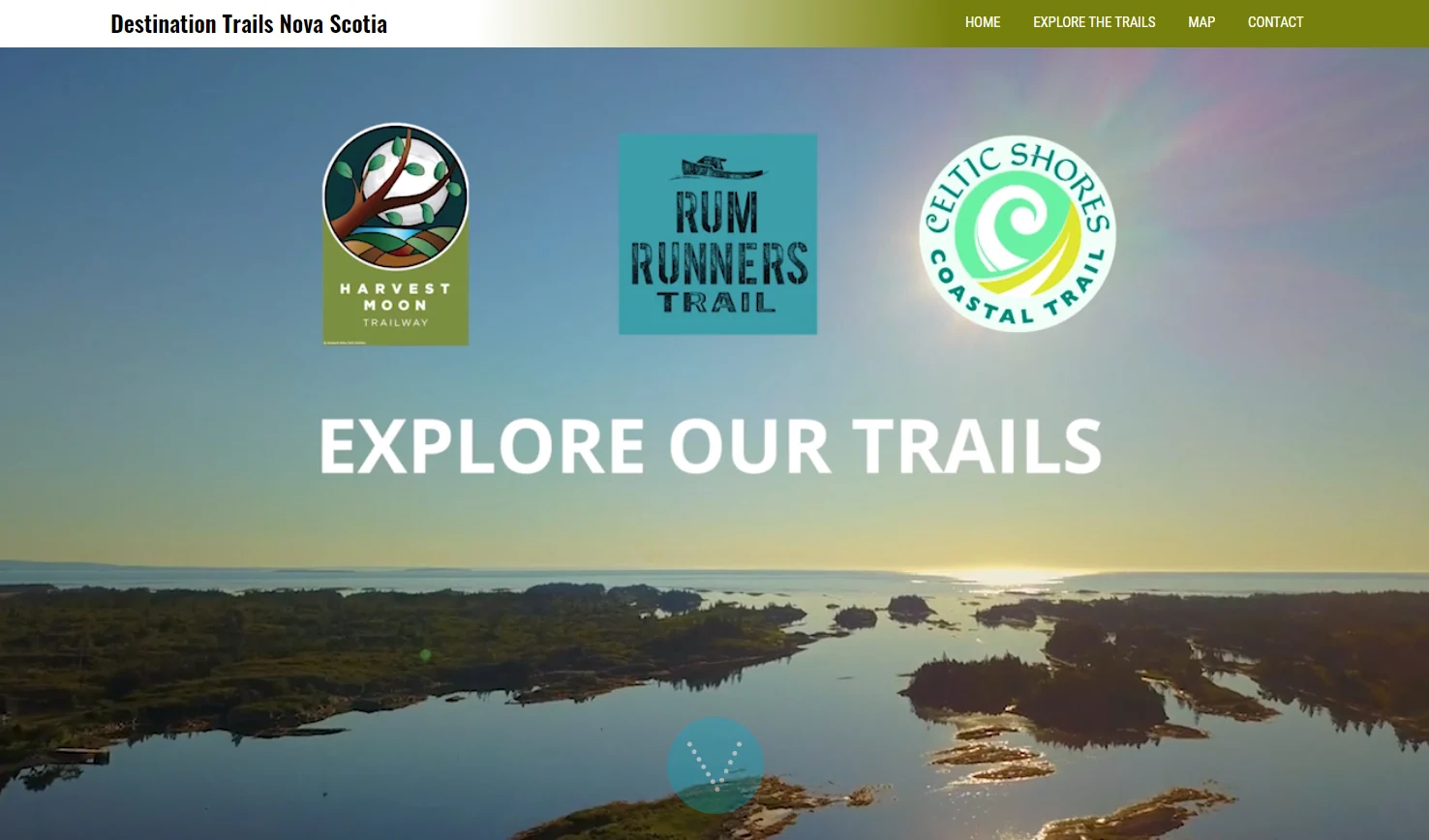
THE CHALLENGE
What needed to change
Destination Trails Nova Scotia needed a single website capable of promoting several destination trails while allowing each trail to retain its own character and identity.
Visitors needed to be able to move easily between the different trails, understand what each offered and find practical information for planning a trip. Each trail also needed to present nearby points of interest, amenities and features in a way that was useful both before a visit and while travelling.
The site therefore had to work equally well as a tourism marketing website and as a practical trail-planning resource.
It also needed to be responsive, accessible and straightforward for staff to maintain without specialist technical knowledge. The original requirements placed particular emphasis on clear navigation, mobile use, performance and accessibility.
THE APPROACH
How we approached it
The website was designed around a shared visual framework, giving Destination Trails Nova Scotia a consistent overall identity while providing each individual trail with its own dedicated section.
Rather than forcing every trail into an identical presentation, the structure allowed the individual character of each destination to come through while keeping navigation and usability consistent across the site.
WordPress was selected as the content-management platform so staff could maintain pages, trail information and other content through a browser-based administration system.
A custom theme was proposed rather than adapting a commercial theme, allowing the design, functionality and information architecture to be built around the requirements of the project without carrying unnecessary functionality. Responsive design, search-engine optimization, page speed and accessibility were considered as part of the site architecture from the outset.
CUSTOM DEVELOPMENT
Built for the requirement
Interactive mapping was a central part of the project.
Each trail was designed to have its own interactive map showing points of interest, trail features and nearby amenities. Visitors could filter the information displayed so they could concentrate on what was relevant to their trip, while the maps also supported suggested itineraries and trip planning.
On compatible mobile devices, geolocation could show the visitor’s current position on the trail, making the same website useful while actually exploring the destination.
The mapping system was based on the open-source Leaflet JavaScript library, providing an alternative to a proprietary mapping platform while remaining suitable for desktop and mobile use.
Custom administration functionality was also planned so authorized users could add, modify or remove trail features, amenities and places of interest without editing map code.
The site also incorporated an announcements and emergency-news system for trail conditions and other important notices. When there were no active announcements, the section could automatically disappear rather than leaving an empty area on the site.
THE OUTCOME
The result
The project established a framework for presenting multiple Nova Scotia destination trails through a single website while still allowing the individual trails to maintain their own identities.
The combination of dedicated trail sections and interactive mapping gave visitors a way to move from discovering a trail to planning a visit within the same website, including access to nearby amenities, points of interest and location-aware information on mobile devices.
For administrators, WordPress and the custom map-management tools were designed to make ongoing trail and visitor information manageable without requiring changes to the underlying code.
The result was a tourism platform designed not only to promote the trails, but to remain useful to visitors while they were actively exploring them.
READY TO START?